



Pacific vs Caribbean Diving in Panama: What’s the Difference?
P anama offers two very different scuba diving experiences. On the Caribbean side, the waters are warm and the seas gentle, with colorful reefs and marine life on at times busy dive sites. The Pacific, on the other hand, where Islas Secas is located, offers dramatic and fascinating underwater experiences, with a high level of privacy at Islas Secas where very few other boats venture. Here, volcanic islands rise from nutrient-rich waters, attracting large pelagic species and migrating marine life following ancient routes through the Eastern Tropical Pacific.
If you’re looking for unique wildlife encounters and adventurous underwater terrain suited to all levels, diving on Panama’s Pacific coast has a distinct appeal.
How does Pacific diving differ from Caribbean diving?
Water temperatures in the Caribbean commonly remain around 27 to 30°C, with calm waters, shallow coral gardens and conditions that suit less-experienced divers.
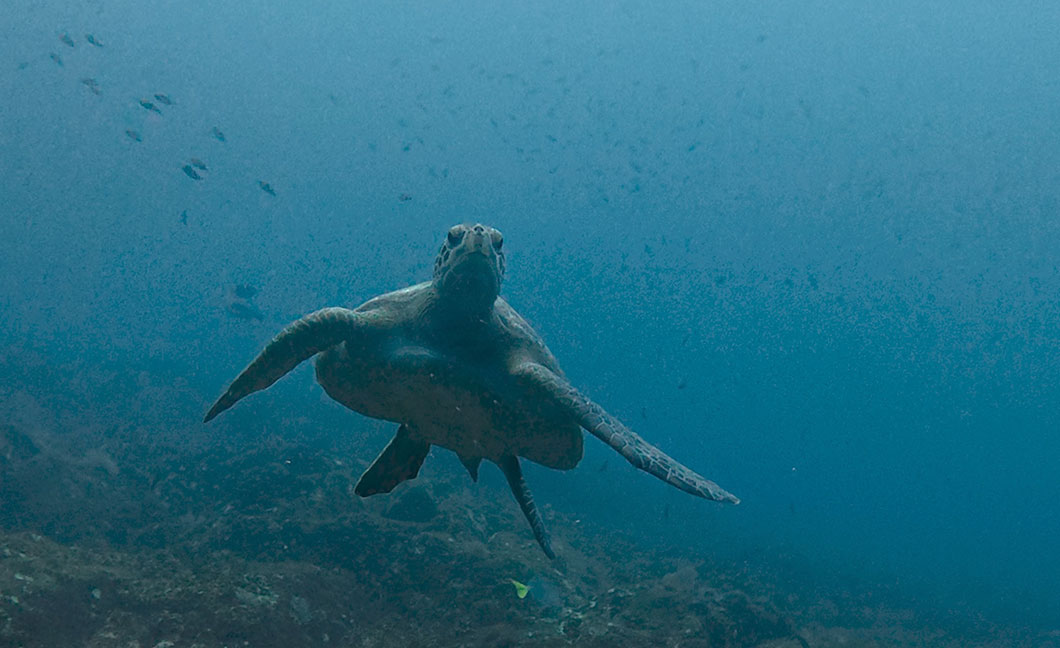
On our side in the Pacific, temperatures fluctuate more significantly, ranging from around 20 to 29°C. Dive sites are often deeper, with at times stronger currents. Visibility can be less consistent as the water contains high levels of nutrients – although this in turn supports the region’s remarkable marine ecosystem. Large schools of pelagic fish are drawn here, alongside turtles, several shark species; during certain seasons, migrating humpback whales, whale sharks and oceanic manta rays pass through these waters (although sightings vary significantly).
As the Pacific side of Panama is less well known for its dive sites, diving at Islas Secas is a very private affair – you will usually have a site to yourself and only very rarely see any other boats.
Is Pacific diving only for experienced divers?
While experienced divers will enjoy the challenge of drift dives, deep dives and sites around Contreras (where you may encounter hammerhead sharks and other large pelagic species), Islas Secas offers fantastic dives suitable for first-time divers, too.
With more than 20 dive sites, including sheltered, shallow reefs, our protected islands are perfect for quite literally testing the waters. Led by a highly experienced team, our PADI-registered dive center offers 2.5-hour Discover Scuba sessions, as well as full certification included in the price of the stay, allowing guests a cost-effective and safe way to experience scuba diving.
What is diving like on Panama’s Pacific coast?
Islas Secas lies in protected waters at the heart of the Gulf of Chiriquí, part of a marine corridor that links Panama with the Galápagos Islands. This is, essentially, a migratory pathway for a fascinating range of pelagic fish and marine mammals, from sharks and turtles to dolphins, whale sharks and humpback whales.
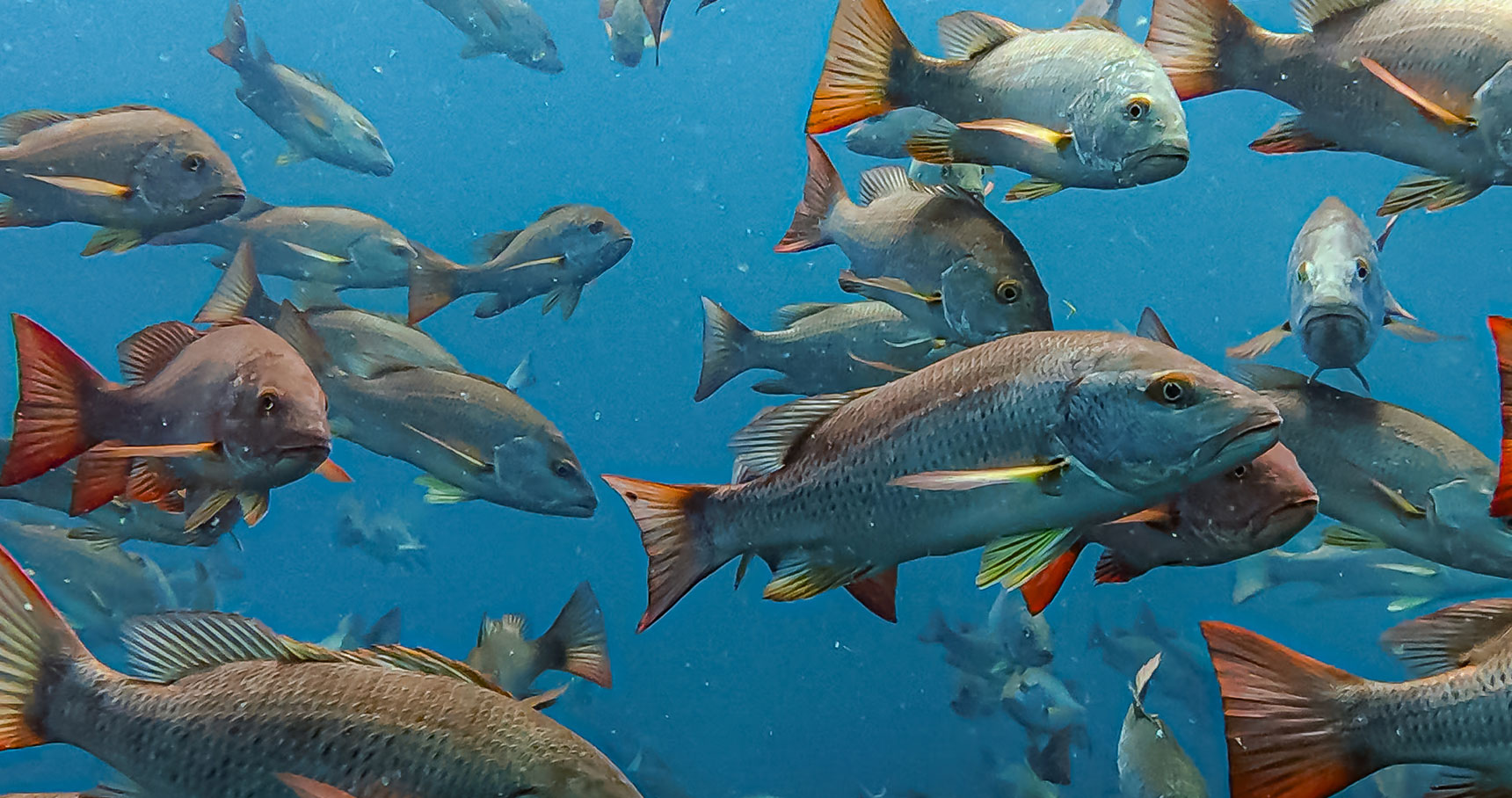
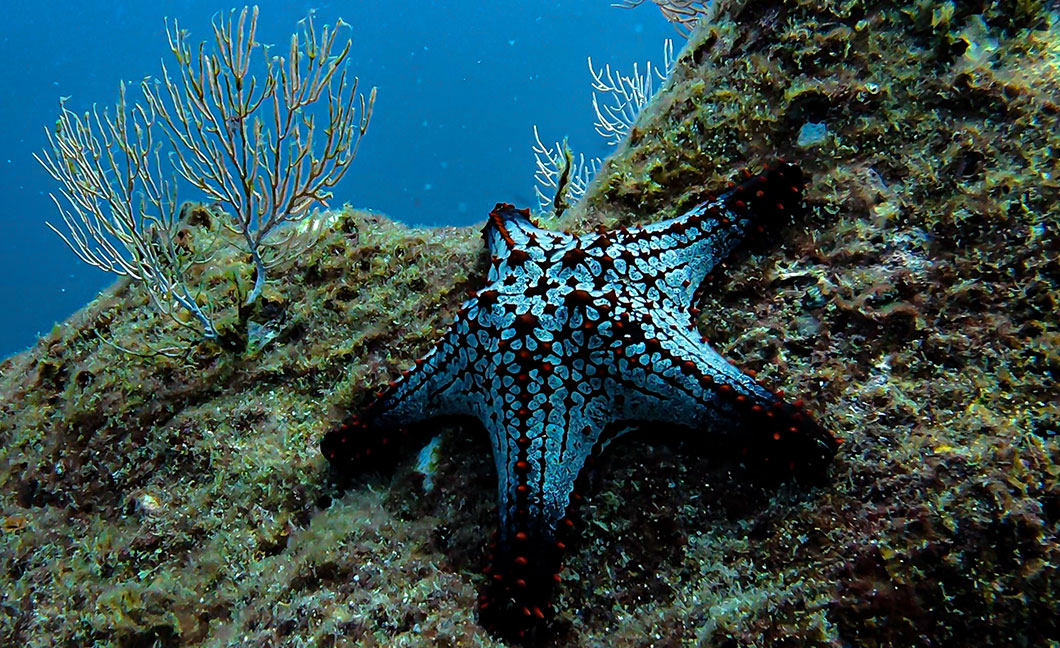
While lucky divers might catch a glimpse of some of these visitors, the underwater landscape is a dramatic constant. Expect to drift along steep rock formations or around soaring seamounts, while shallower dives reveal intriguing corals and schools of reef fish – these waters support more than 750 species of fish across the region.

Diving at Islas Secas
Islas Secas offers more than 20 sites within and around its protected archipelago. The sheer variety is staggering: within just a few minutes of the resort are beginner-friendly coral gardens, interesting drift dives and volcanic pinnacles to explore.
Highlights include:
- Iguana’s Garden, a colourful 12-meter dive ideal for beginners and Discover Scuba Divers
- La Bruja, (“The Witch”), a steep pinnacle dive defined by hard corals, barracuda and turtles
- Fisherman Rock, featuring sea fans and diverse marine life, good for intermediate divers
- Contreras, where advanced divers might encounter hammerhead sharks and other large pelagic species
- Conservation-driven scuba diving, including marine-life documentation and long-term ecosystem monitoring
- Coiba National Park, a UNESCO World Heritage Site, an hour’s boat ride away, with the chance to see manta rays and seasonal whale sharks.
When is the best time to dive Panama’s Pacific coast?
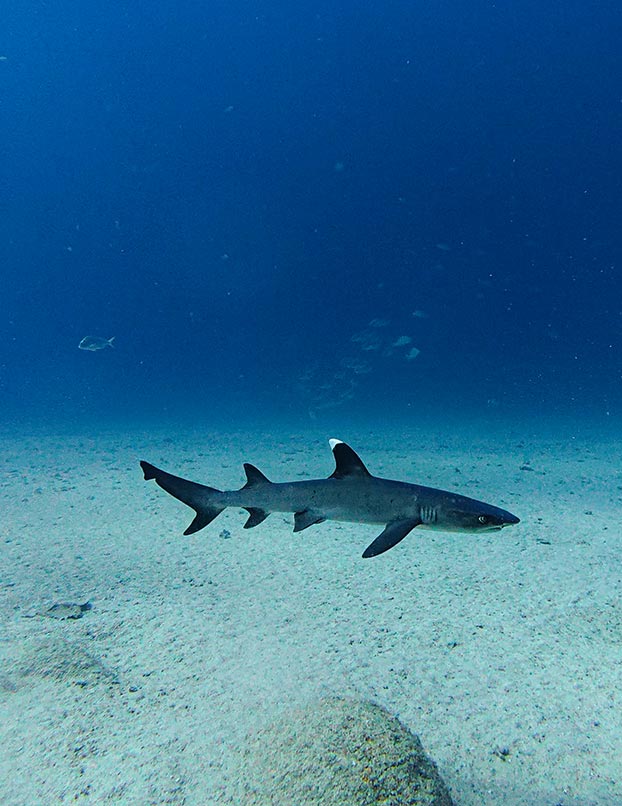
Diving at Islas Secas is exceptional throughout the year, with a huge variety of resident marine life including reef fish, turtles, rays, whitetip reef sharks, moray eels, schools of jacks and barracudas.
Different seasons also bring migratory visitors and changing conditions. From December through April, waters around Islas Secas generally bring clearer visibility and calmer waters. January to April offers the chance to see seasonal whale sharks further afield.
From May onward, increased plankton can reduce visibility, but this is also when megafauna pass through our waters; think manta rays, and other large marine life. Humpback whales typically move through the region during Green Season, July to September, and while it is not possible to approach them underwater, our expert-led whale watching trips offer excellent opportunities for sightings.