





A Marine Safari with World-Class Birding and Bird Watching
“"Wilson gushed about the 100 species of birds as he pointed out kiskadees, vireos, lesser elaenias, and mangrove yellow warblers. Did I know that many birds migrate from south to north? he asked. “We always think of north-south migration,” Wilson said, “but in Panama, we often see birds flying north to escape competition from northern birds heading south.”“
Updated: November 2026
I slas Secas Offers Exceptional Birding Opportunities – Here’s Why
Did you know that the Isthmus of Panama was formed around 3 million years ago? You may wonder what that has to do with birds – but this geological happening, believed by scientists to be one of the most important geologic events of the last 60 million years, is the reason we’re blessed with such a huge variety and quantity of birds at Islas Secas.
Drawing species from both the northern and southern hemispheres, Islas Secas acts as a natural meeting point for a cornucopia of birdlife. The result: an extraordinary mix of endemic and migratory birds which you will be hard-pressed to see together elsewhere, from blue-footed boobies, Cocos boobies and soaring frigatebirds, to Yellow-headed Caracaras and Galápagos shearwaters. Among the archipelago’s most remarkable migratory visitors is the Swainson’s Thrush, which passes through on its long journey between North and South America.
With 146 identified species (and counting), any time of year offers fantastic birding experiences, but the highlights of the calendar are March to April and September to November, when huge colonies of migratory birds journey through the Gulf of Chiriquí.
It helps, of course, that our driving force is the conservation of our beautiful archipelago, with a number of scientific programs in place to help monitor and protect the area’s birdlife – some of which guests can even get involved in. And you’ll be guaranteed expert guidance from our team, whether it’s in our gardens, on one of our groomed trails, on a special family excursion or a trip further afield.


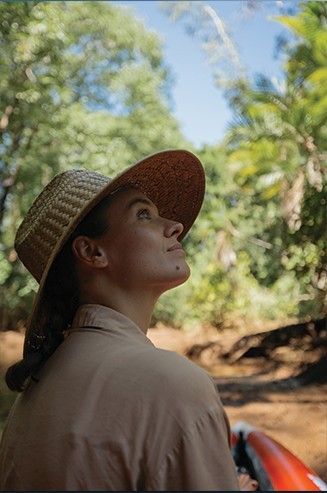
“Once people start birdwatching, they rethink their whole environment," explains Beny Wilson, director of Conservation at Islas Secas. "We are exposed to these spectacles of nature, but it takes someone to guide us and light that flame to appreciate them.“
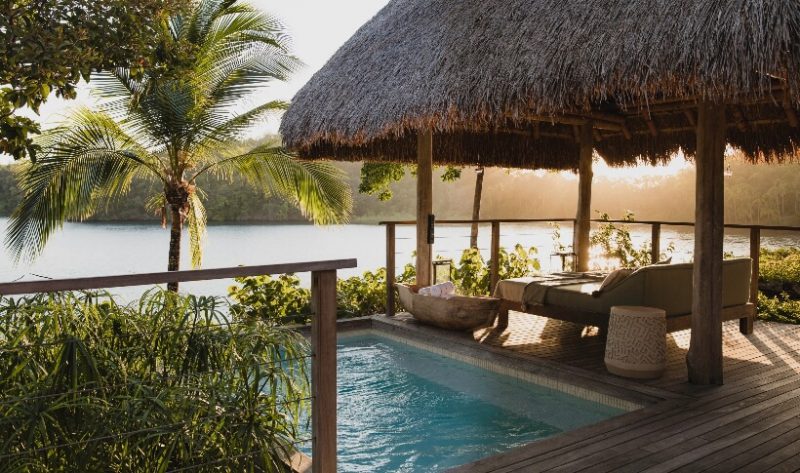
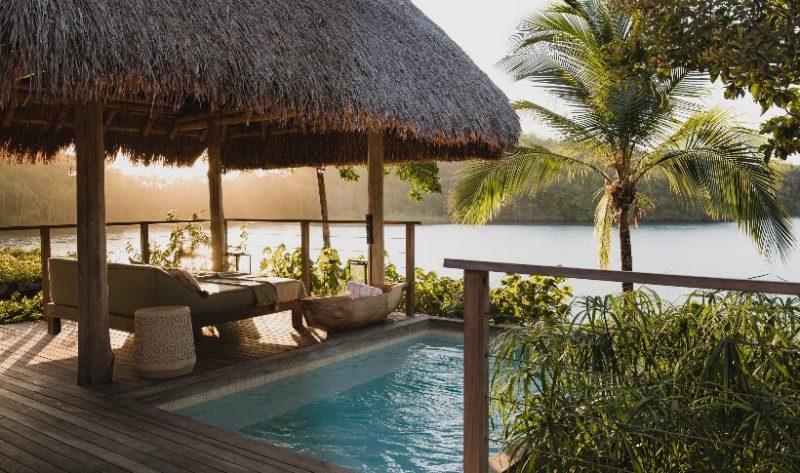
You don’t need to go far to see fabulous species, either. As one valued guest puts it, “I’m a bird lover, and there was great bird watching from the pool”. Beny says that to see fantastic birds at Islas Secas, you don’t even need to leave your Casita’s private terrace: “The nectar-feeding birds that frequent the wildflowers around the resort include the bananaquit, various hummingbirds, and honeycreepers. They all showcase the vibrant, glittering colors typically associated with tropical birds.”
Birding here is not reserved for seasoned enthusiasts. Beginners and children are just as welcome, and our naturalist guides will show you how to spot, identify and simply enjoy the birds around you during your stay.
Guided birding on the island is included in your stay. Beyond that, three further experiences form a unique part of our marine safari offering, and excursions beyond the archipelago are available at an additional cost. All trips include an on-the-go breakfast, a box lunch, snacks and drinks, and the services of our expert guide and experienced captain – inquire for rates.

1. Birdwatching in Coiba National Park
Explore the pristine primary rainforests of this world-famous national park, and spend a full day in the company of our birding experts. Coiba’s rainforest habitat offers a very different day from the open-ocean birding around the archipelago, with forest species you will not find on the islands. Here’s what you might see:
- Brown-backed dove
- Coiba spinetail
- Scarlet macaw
- King vulture
- White-throated thrush
- Three-wattled bellbird
- Red-rumped woodpecker
2. Deep-sea Pelagic Birding
Head out on our fully-fitted boat for an adventurous day on the high seas, visiting the deserted Ladrones and Paridas islands and seeing the fascinating variety of migratory and endemic birds of the Gulf of Chiriquí. Bird species you might see include:
- Blue-footed booby
- Cocos booby
- White ibis
- Galápagos shearwater
- Wedge-tailed shearwater
- Nazca booby
- Wedge-rumped storm petrel
The species change with the seasons, which makes birding on the water a year-round pursuit. One season a flock of Sabine’s Gulls settled around the islands for two months and became the seasonal target of our nature cruises, a reminder that no two trips look quite the same.
3. Magnificent Frigate Bird Monitoring
Our archipelago is home to the second largest colony of magnificent frigatebirds in Panama, and the colony sits at the heart of our conservation work. Each year our team carries out a nesting count, and guests are invited to join them on the boat, helping with the count and contributing to valuable ornithological research.
The research does not stop at the annual count. Our conservation team is now exploring bioacoustic monitoring, recording the soundscape of the islands as part of an effort to measure biodiversity in a quicker, standardized and more cost-effective way. We are continuously finding new ways to research and protect the wildlife of Islas Secas, and with them new opportunities for guests to take part. Watch this space.